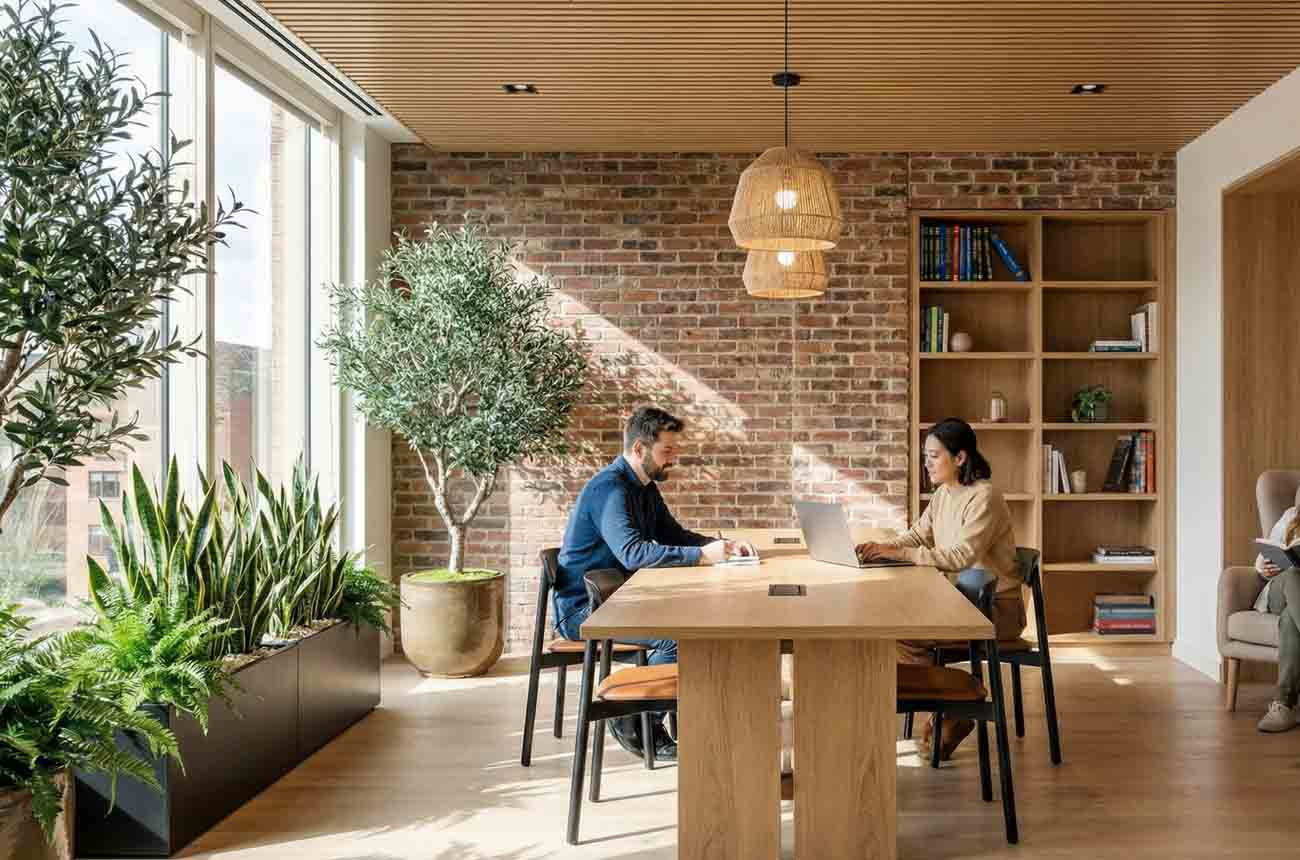
Consistent improvements have been observed in measuring task focus, accuracy, and decision-making with Moodsonic, compared to no soundscaping.
Outcomes include 8% improvements in decision-making, 5% improvements in working memory, and a 31% increase in cognitive task performance in real-world workplace testing.
Separate studies also found substantial improvements in task accuracy – including 38% fewer errors on more complex tasks and 78% fewer errors on simpler tasks – indicating improved attention and reliability rather than speed alone. In another study, focus tasks were completed 22.7% faster without loss of accuracy, with Moodsonic's soundscaping.
These findings suggest that Moodsonic can support sustained focus and better decisions in real working conditions.

Across multiple studies, Moodsonic’s biophilic soundscaping has been shown to support restoration and wellbeing.
Results from independent customer research have shown a 24% reduction in self-reported stress, a 12% improvement in acoustic comfort, and 9% increase in confidence managing stress compared to control conditions (no soundscaping).
Physiological measures support these findings, with research showing a 10% reduction in heart rate with Moodsonic compared to typical background noise alone.
In qualitative studies, occupants consistently describe Moodsonic's soundscaping as calming, soothing, and supportive of relaxation and rest. Healthcare staff report using soundscaping proactively – not just as background ambience, but as a tool to help calm anxiety and gently initiate recovery-oriented activities.

Beyond focused work, research indicates that biophilic soundscaping can support more generative and social modes of productivity, including creativity and collaboration.
One Moodsonic workplace study found a 10% improvement in creative thinking (novel uses test), while another found 20% improvement in self-reported collaboration.
Alongside qualitative feedback, occupants frequency describe Moodsonic as contributing to more positive sense of energy and life in spaces. This aspect has been shown to be particularly effective in quieter spaces that might otherwise discourage idea-sharing or feel lifeless.
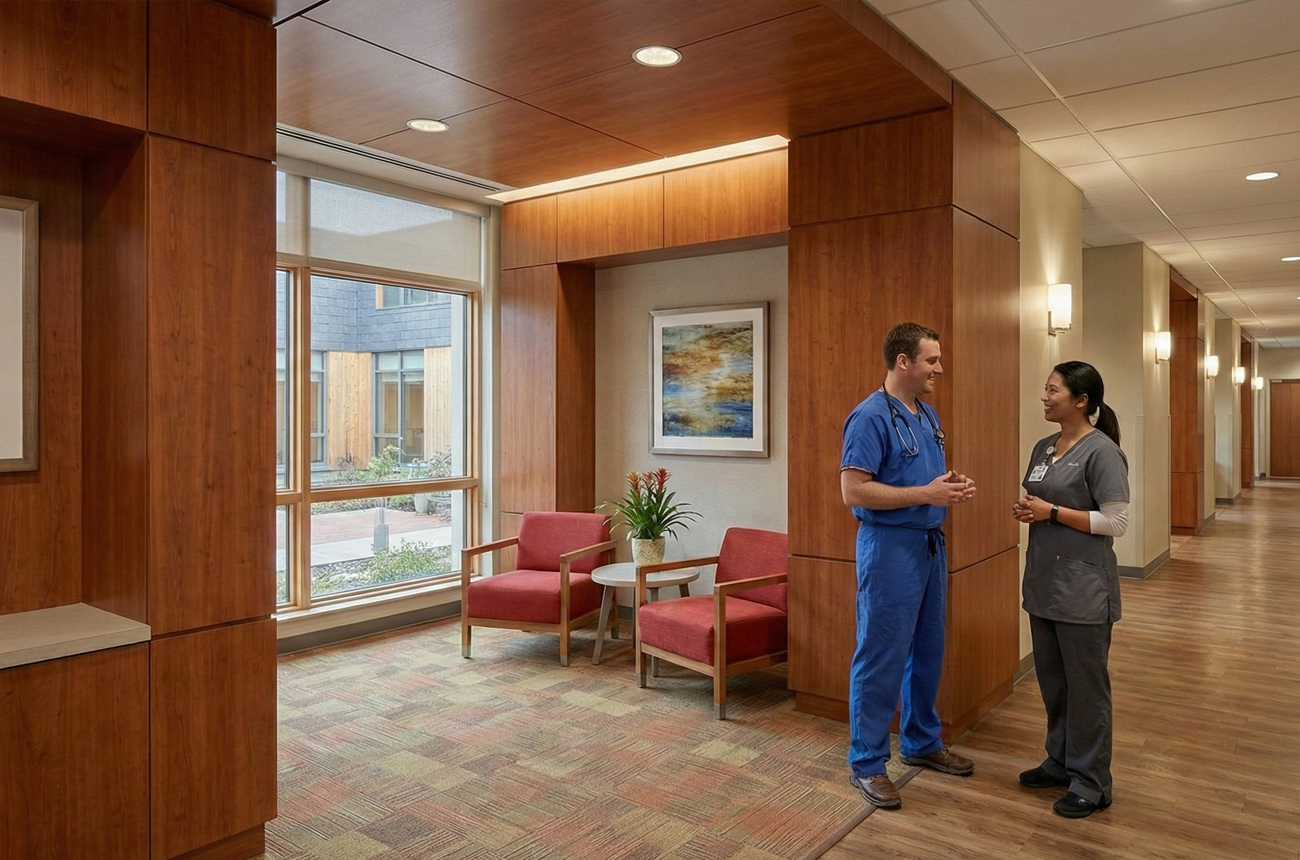
Objective acoustic studies show that Moodsonic’s biophilic soundscaping reduces speech intelligibility – a key driver of both distraction for listeners and privacy for speakers. This is an important metric for encouraging productivity and comfortable collaboration.
Using the Speech Transmission Index (STI), two separate studies measured 84% and 89% reductions in speech intelligibility when Moodsonic’s biophilic masking soundscapes were active versus no soundscape.
Qualitative feedback aligns with the objective acoustic measurements, with occupants noting that Moodsonic helps them “tune people out” and “neutralizes” distracting noise.
Moodsonic has been evaluated through customer-led workplace studies and research partnerships, conducted in North America, Europe, and Asia Pacific. Research is carried out in live, occupied workplaces and hospitals as well as controlled lab settings, comparing conditions with soundscaping on vs off (normal background noise), silence, and traditional sound masking.
Methodologies and measures include cognitive task performance testing (e.g. decision-making, attention, working memory), employee surveys, interviews, and focus groups, physiological measures (e.g. heart rate, EEG), and objective acoustic analysis, including Speech Transmission Index (STI). Participant numbers range from ~10–20 in lab studies to 100+ in real-world workplace research, with several studies running over multiple months, enabling assessment of sustained, real-world impact.
Moodsonic contributes to WELL certifications globally, contributing up to 10% of credits on a single certified project and being part of multiple WELL Platinum–certified spaces.
Moodsonic's impact is recognized by the International Well Building Institute (IWBI). Investing in Health Pays Back highlights Moodsonic's research-backed benefits and the importance of active soundscaping solutions in healthy buildings.