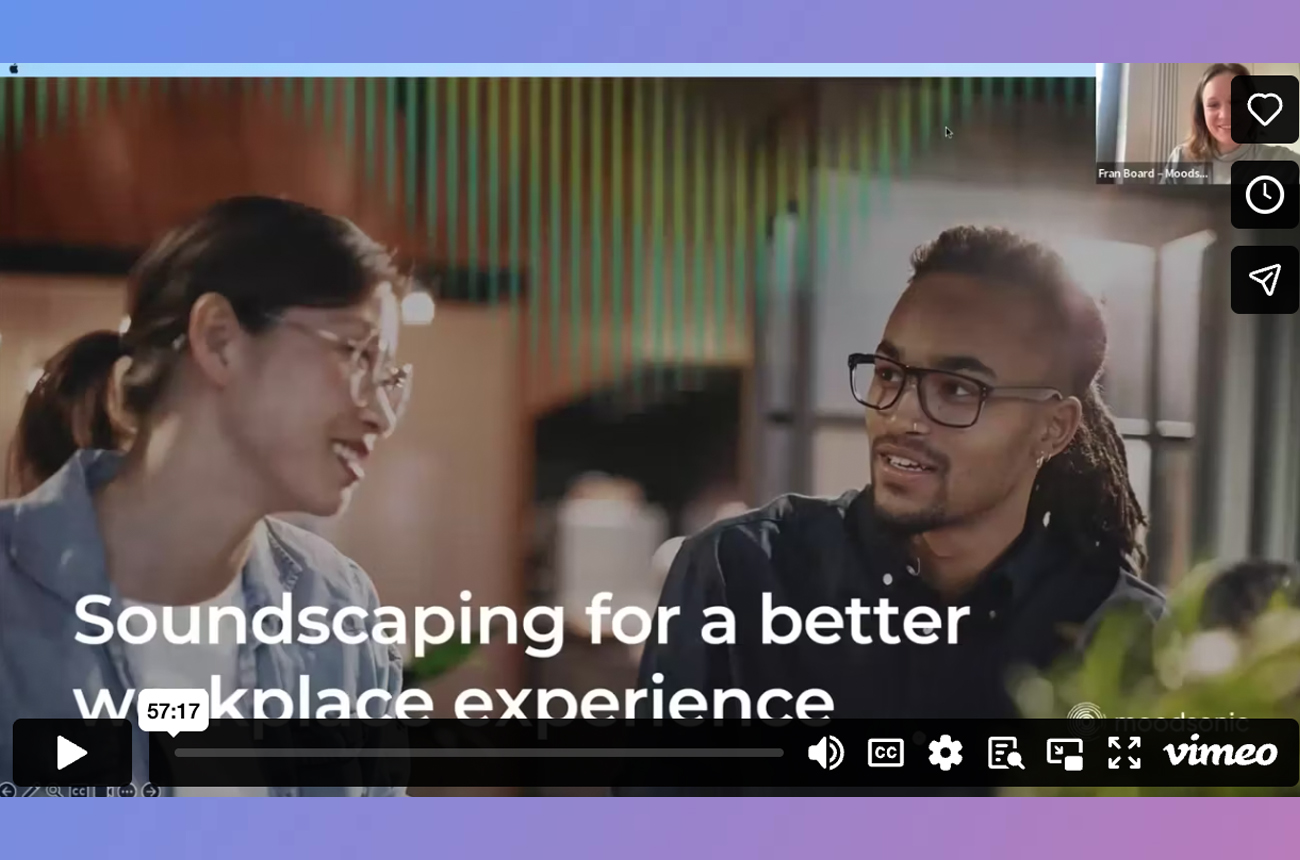
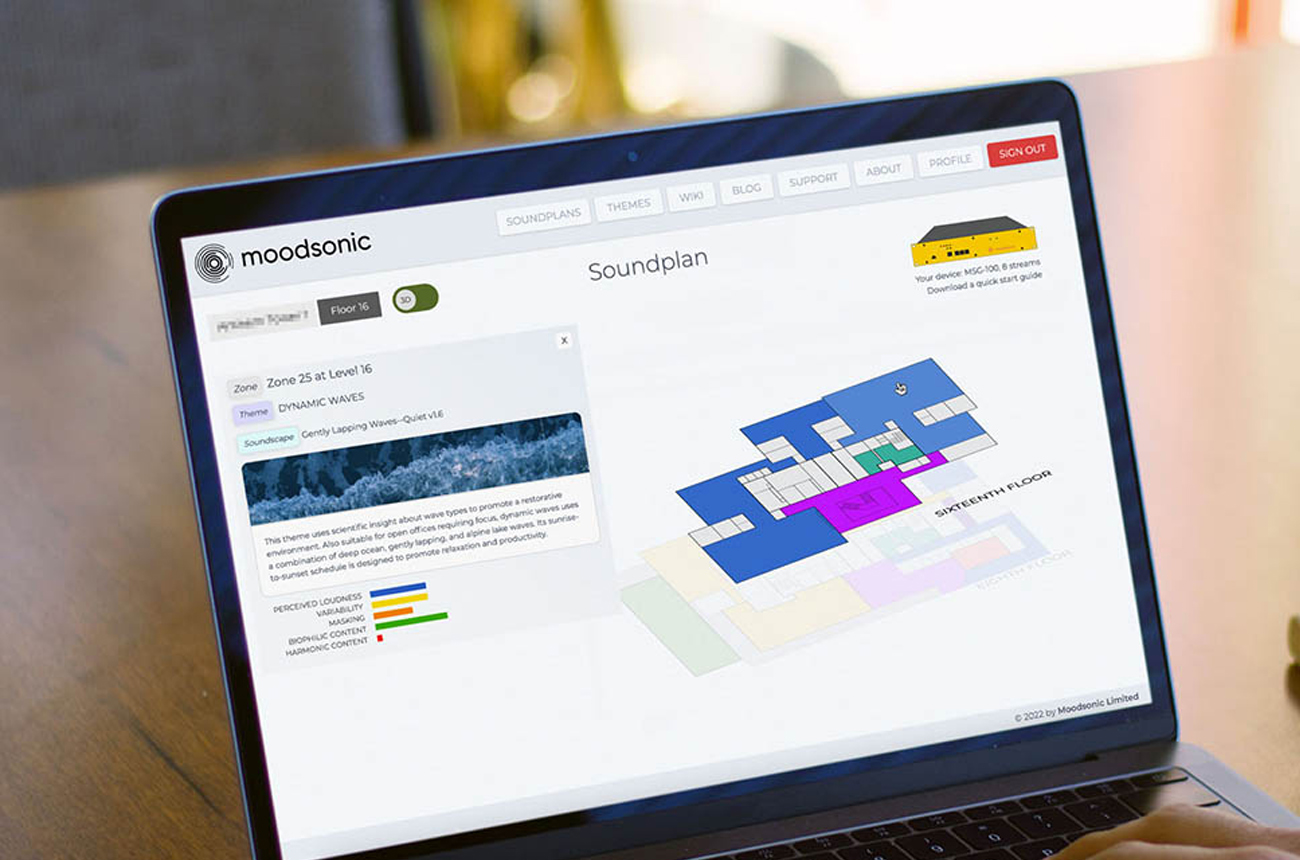
We're at a whole host of events in Asia over the next few weeks! As part of that, we're taking part in MTM Solutions' Workplace Experience Chit-Chat events in Hong Kong and Singapore. Each session is seven minutes from seven speakers, each with a unique take on workplace experience.


Moodsonic is built on a very simple concept: Natural sound is inherently healthy and productive for humans. We feel our best when we’re in natural environments, and bringing natural sound indoors has been shown to reduce stress and improve cognitive output. However, there’s a lot of innovation required to bring this idea to life. Simply playing a birdsong track inside an office isn’t going to help people – in fact, you’ll make things worse for users.One of the most important innovations for Moodsonic has been the creation of generative, responsive soundscaping. We discovered early on that soundscaping can’t be delivered into offices as loops. Humans are very good at recognizing patterns. Even when we tested audio loops that were a week long people still picked up on them!

In recent years, the value of neurodivergent employees has started to be properly recognized. But we have a long way to go in designing equitable workplaces that nurture different people day-to-day.Inclusive design sometimes involves practical physical interventions, like wheelchair ramps. But for neurodivergent people, the barriers may not even be visible. Many people face sensory obstacles in the built environment.
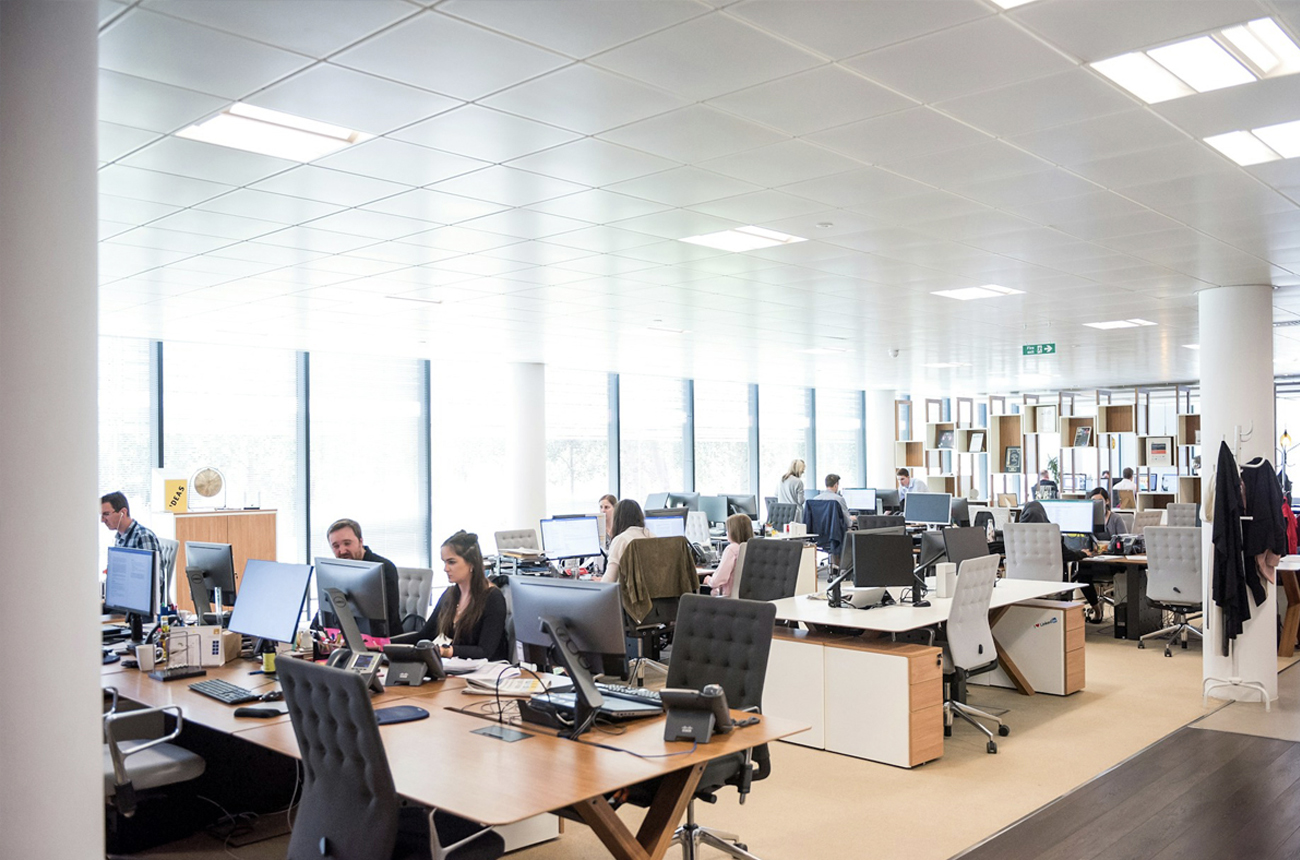
At the beginning of human history, the built environment looked very different from how it does now. It consisted of caves, huts and temporary dwellings before more permanent structures began to be formed from materials like clay, mudbricks and stone.

Designed by M Moser Associates, the headquarters was conceived as a dynamic “destination” workplace to support GSK’s hybrid teams and evolving business needs. The design brings together localized character with global brand standards, creating a flexible, inclusive, and data-driven environment that empowers collaboration, connection, and performance.

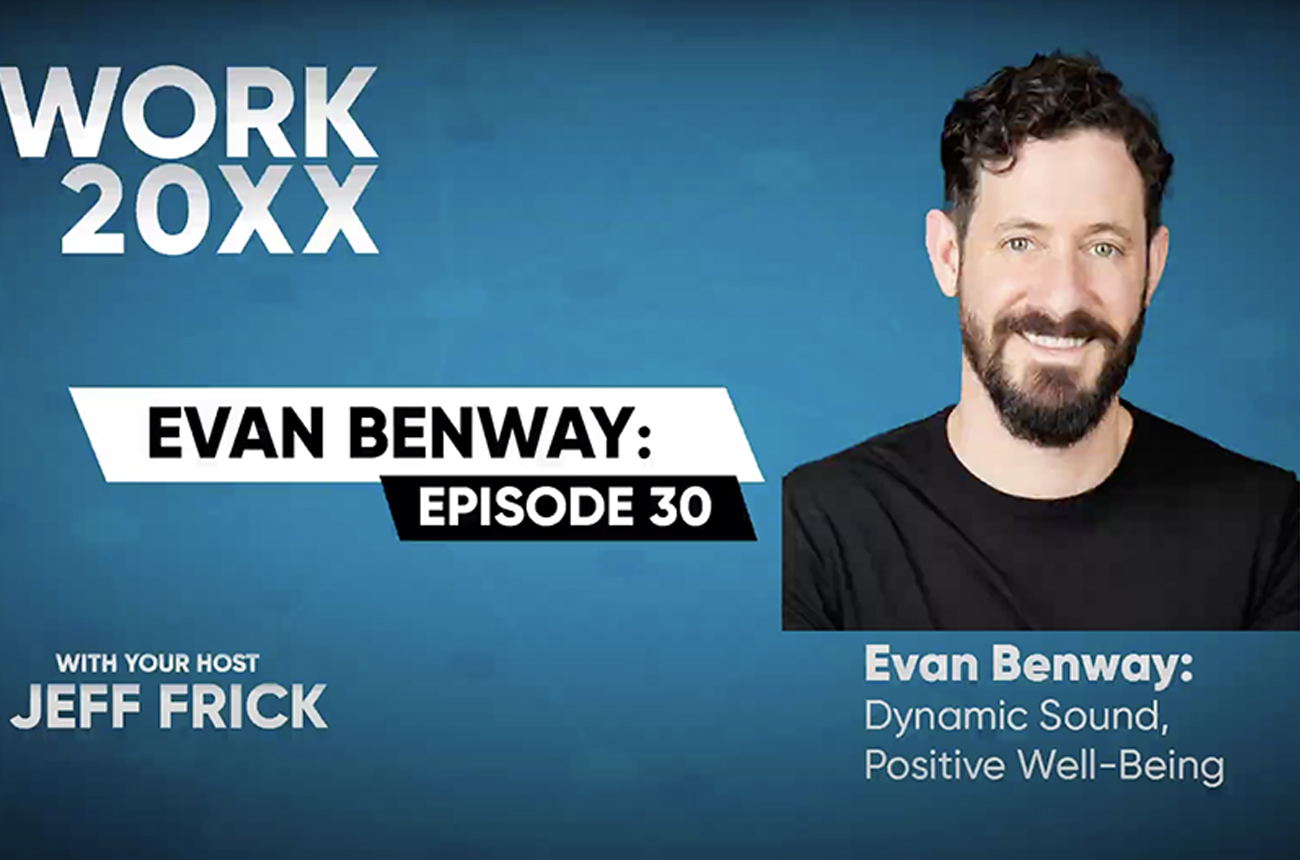
Sensory sensitivity, activity, time of day, occupancy, noise level, visual design and more… How can offices support such wide array of people with so many variables at play? Evan Benway spoke with Jeff Frick about how soundscaping, science and AI can respond to the constantly changing demands of the workplace.
In 1984, Ulrich’s famous study found that patients whose windows faced a park recovered faster compared with those looked onto a brick wall. Since then, many thousands of pieces of research have demonstrated that nature can positively affect human health.

Lighting and acoustics specialists Acoulite have partnered with Moodsonic to bring the scientifically-designed sounds of nature into their Dubai workplace in a new showcase open to industry professionals.

Receive monthly updates to your inbox.