
The Biophilia Summit is Living Future Europe’s annual international conference dedicated to advancing the theory, practice and future of biophilia. Moodsonic's Evan Benway is delivering a speech as part of the summit's agenda: "Biophilic Soundscaping at Scale: From Research to Responsive Buildings". Now in its fourth edition, the Summit brings together researchers, designers, architects, developers, manufacturers, educators, artists, policymakers and innovators who share a common ambition: strengthening the relationship between people and nature to create healthier, more resilient and regenerative futures.


We’re excited to be a part of Design Week Calgary. As part of this year’s program, DIALOG is hosting an in-studio panel exploring sound as a design material and its impact on wellbeing, focus, productivity, and inclusion in the workplace.

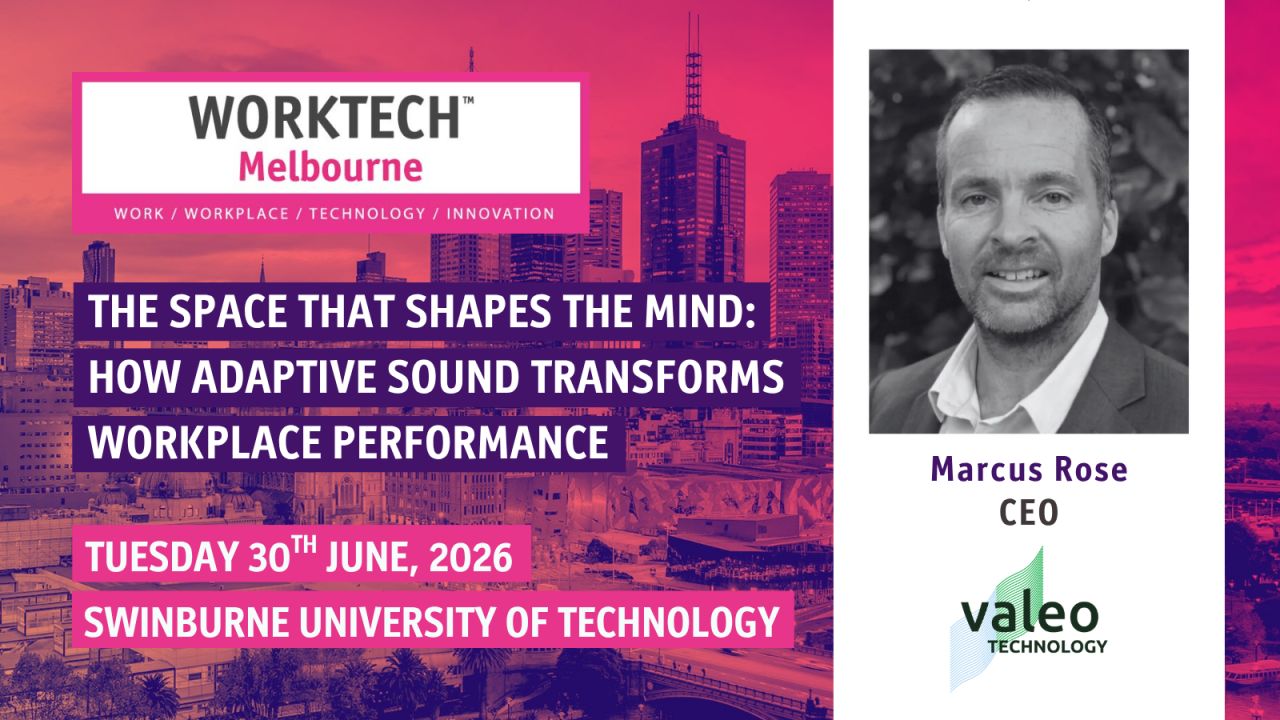
At WORKTECH26 Sydney, Marcus Rose, CEO of Valeo Technology, explores how adaptive soundscaping and sensory technology are reshaping workplace experience. In his session, Marcus will examine how intelligent sound environments respond in real time to support focus, collaboration and wellbeing. Drawing on projects across APAC, the session looks at the neuroscience of sound and why auditory experience may be one of the most overlooked dimensions of workplace design. Take a look at the full conference agenda to read more about this session & the wider programme.
TED2026 is live in Vancouver this week – with talks, the debates, and a renowned concentration of new ideas. The Listening Room is a dedicated space for restoration and decompression, created for attendees who need to step away and reset.

Join thought leaders from HOK, Visa, EY, and Moodsonic at this Infocomm 2026 session. As organizations strive to create environments that support all employees, designing for sensory processing and neuroinclusion has become critical. Technology, when thoughtfully applied, can transform workplaces and public spaces into environments that empower neurodiverse individuals to thrive. But there are downsides as well that we need to be aware of and address.

Moodsonic are running a 40-minute workshop at IFMA World Workplace Europe alongside Neuro-D's Sarah Tancell – aligning with IFMA's inclusive spaces theme across the event.

“In the next generation of smart workplaces, technology won’t just connect us – it will care for us.”Join Marcus Rose of Valeo Technology, and Simon Long, Senior Director of Client Technology Consulting at CBRE, for an inspiring conversation on the future of workplace experience – “Connected by Design: Sensory Wellbeing in a Smart Workplace.”
After its debut last year, the Biophilic Design Conference returns, this time to Westminster, London, exploring the themes of Policy, Place & Planet in relation to biophilic design. Set on the doorstep of the UK’s government, it’s a fitting location to discuss how design can influence healthier, more sustainable places and policies, and we’re delighted to be part of it.

Join AKRF and Moodsonic for an event exploring how responsive soundscaping and biophilic design are redefining acoustics and experience in buildings.Living Acoustics introduces an evidence-based approach that treats sound as a dynamic design medium. Discover how adaptive technologies and biophilic acoustical treatments can be integrated into architecture to enhance human experience.

We’re proud to be part of an incredible event this week exploring the future of sound in healthcare. The Raise Your Voice symposium is designed for patients, caregivers, and members of patient and family advisory councils, offering strategies to strengthen collaboration with hospitals and enhanced patient-centered care.
Join us for the first ever Biophilic Design Conference run by the Journal of Biophilic Design at the Barbican London on 12th November 2024. Moodsonic is delighted to be an official partner, and will be soundscaping the conference to create a supportive, biophilic experience throughout the day.
In the evolving landscape of workplace design, sound plays a pivotal yet often overlooked role. Historically perceived as a negative element, our presentation aims to redefine sound as a positive, transformative force in work environments. Anchored in the innovative concept of 'Biophilic Soundscaping', we'll explore how strategic sound design can significantly enhance wellbeing and cognitive performance, leading to more engaging and welcoming spaces.
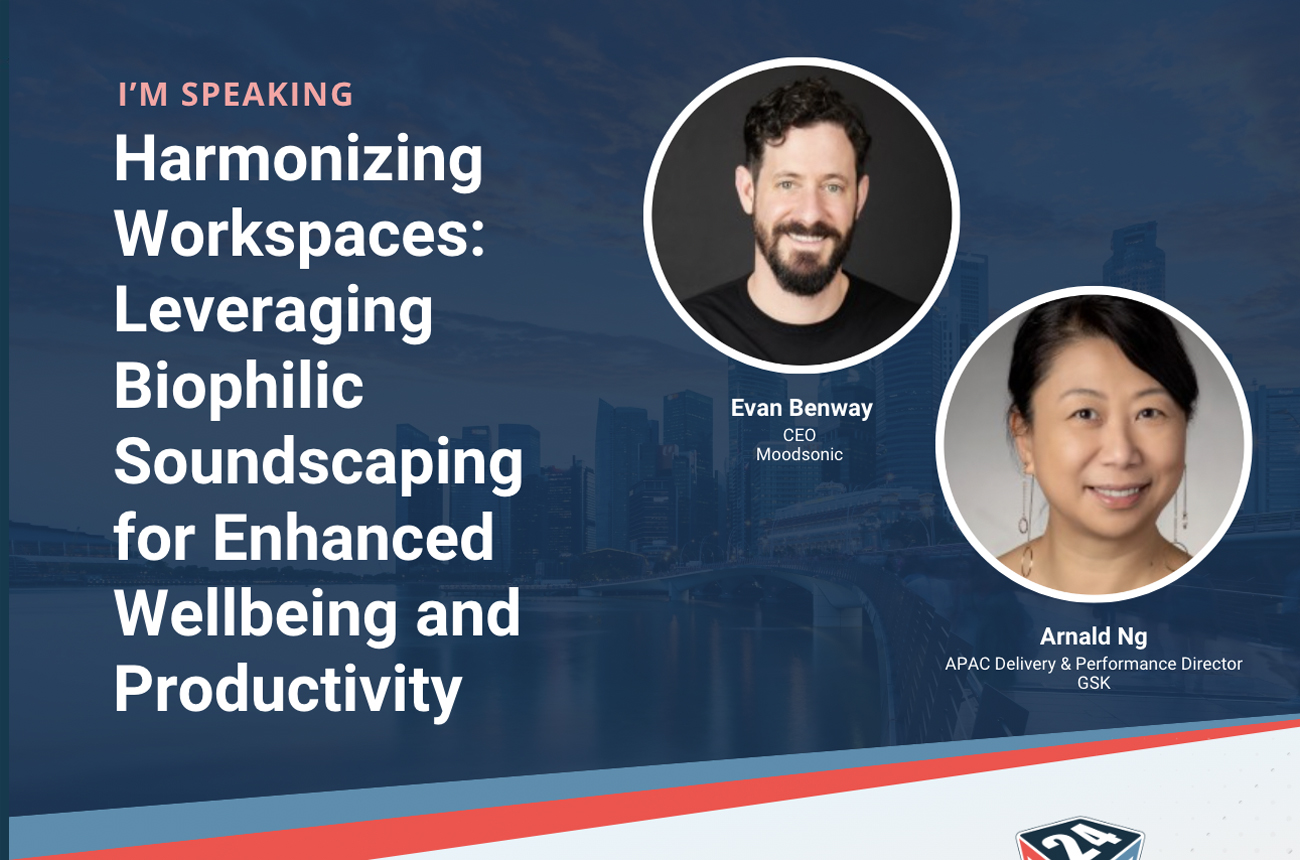
Moodsonic's Director of Product, Jeff Larson, is speaking at WORKTECH's San Francisco conference about the future of work. Join Jeff as he discusses the role of sound in enhancing workplace productivity, wellbeing and user experience. Uncover why noise is a top distraction, how scientifically-designed soundscapes outperform silence, and the importance of creating tailored auditory experiences that support diverse employee needs.
Sound and scent strategies can elevate people’s experiences and help create high-performance buildings. Moodsonic partner Marcus Rose will be speaking at this CoreNet Global event in Sydney about sensory design and the technology that can make it happen.
Workplaces generate more data than ever. But it’s often not bringing clarity, or being used at all. Much of it sits in silos.Occupancy data might tell us how many people are in a space, but not how they’re using it. Is it for quiet focus, collaboration, or a mix of the two?

What if your workplace could sense how people are using it and adapt automatically to support them? At CBRE's new Singapore office, sound, data and technology are coming together to create spaces that flex around people’s needs. And Inavate’s latest issue gives insights into exactly how they’re doing it...
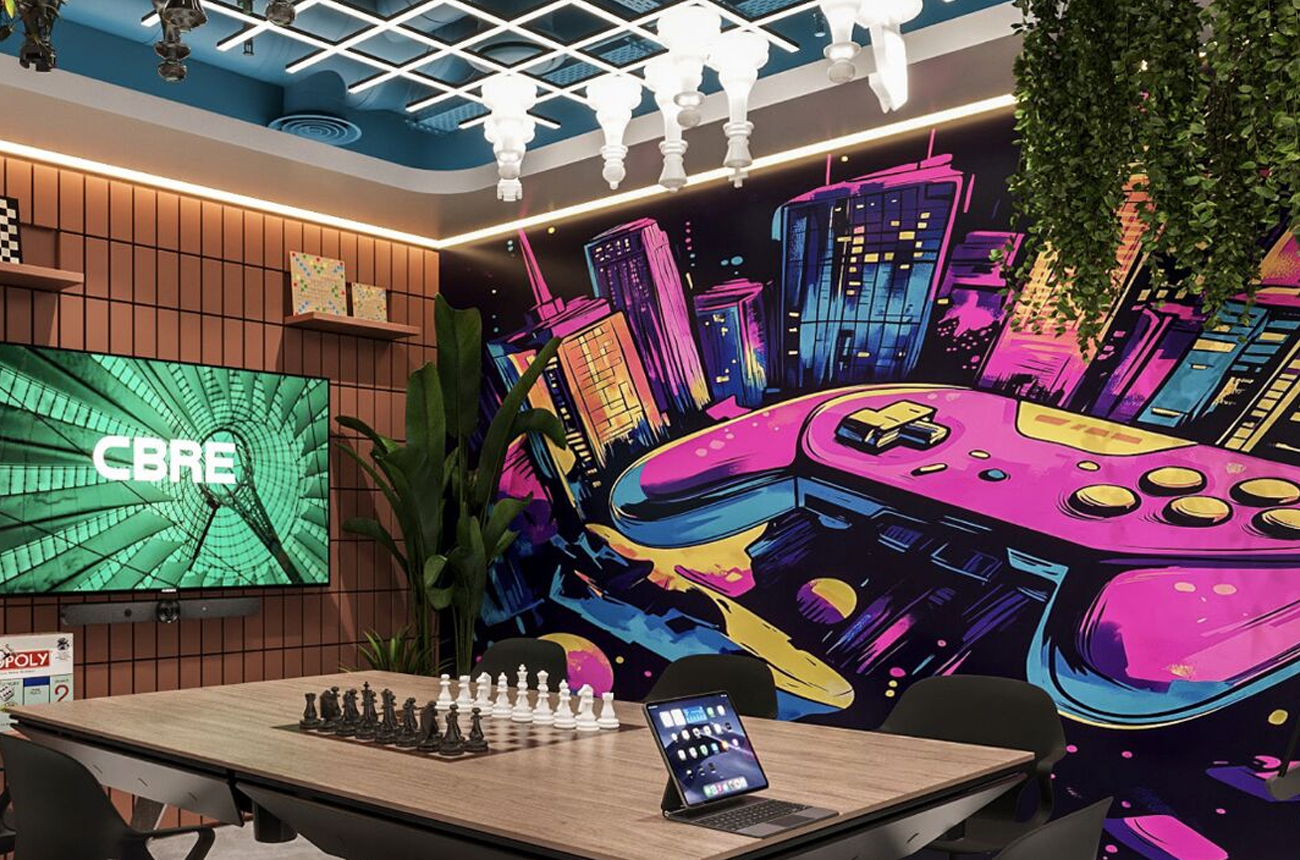
The IWBI's new special report, Investing in Health Pays Back, demonstrates that investing in people is good business. It quantifies how wellbeing translates into measurable returns, from air quality and light to thermal comfort and biophilia. Sound has long been recognised in WELL as one of its core concepts. But in this latest report, it takes on a more dynamic role – not just as something to control, but as something to design with.

A new peer-reviewed study in Nature has revealed a significant link between building standards and how people feel in their environments. The research shows that occupants of WELL-certified buildings are 39% more likely to be satisfied with their experience than those in LEED-certified buildings. Both certifications aim to improve building performance, but only one puts human wellbeing at the forefront.The WELL Building Standard focuses on how buildings impact people. And according to this research, that focus makes a difference in human experience.

Sound is architecture we can’t see. It defines spaces and influences behavior as much as light, material, or layout – shaping how we feel, think, and function.Sound may also be the most elusive element in biophilic design, especially in urban environments. Opening a window might let in some birdsong, but it brings with it traffic, construction, and other pollutive noise. Closed windows trap us with the hiss of ventilation or the drone of machinery, devoid of any nature.

Most offices have a problem with noise. Noise has been a major complaint in workplaces for decades. It affects privacy, distraction and wellbeing. Working from home has only highlighted just how poorly offices function in this regard. Often, employees are able to focus better at home than in the building that’s actually designed for them to work in.Workplace soundscapes are a relatively new concept. Historical approaches to office sound have tended to focus on eliminating sound from offices. But this can cause more problems than it solves. Spaces can end up being unnaturally quiet and devoid of life. It’s become more of a problem post-Covid, where occupancy is much lower than before.
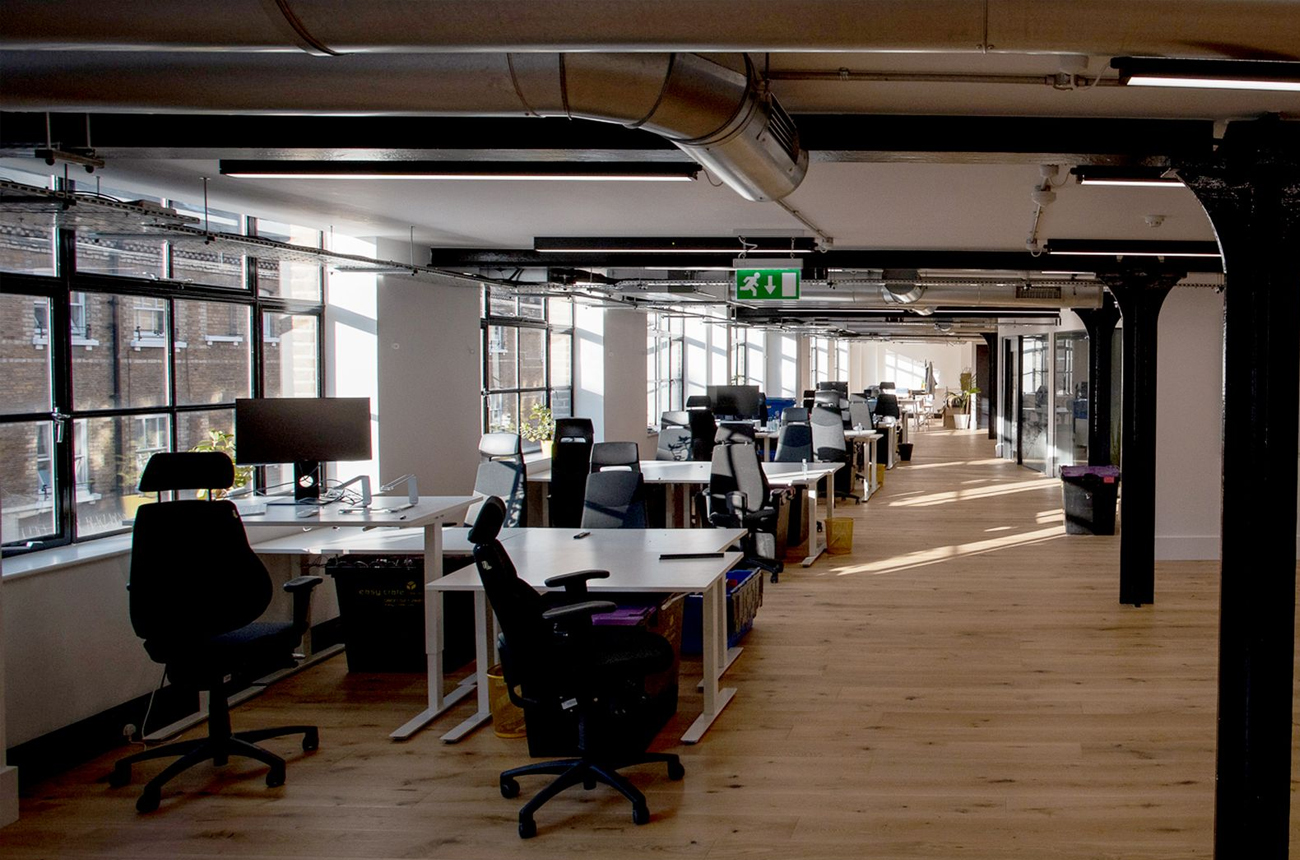
In architecture, the sound of a building is usually overshadowed by its visual appearance. It might even be an afterthought. Yet, as researchers learn more about our relationship with sound, the need for “sonic architecture” is becoming more evident. And with smart building technology, it’s become an accessible tool for designers too.
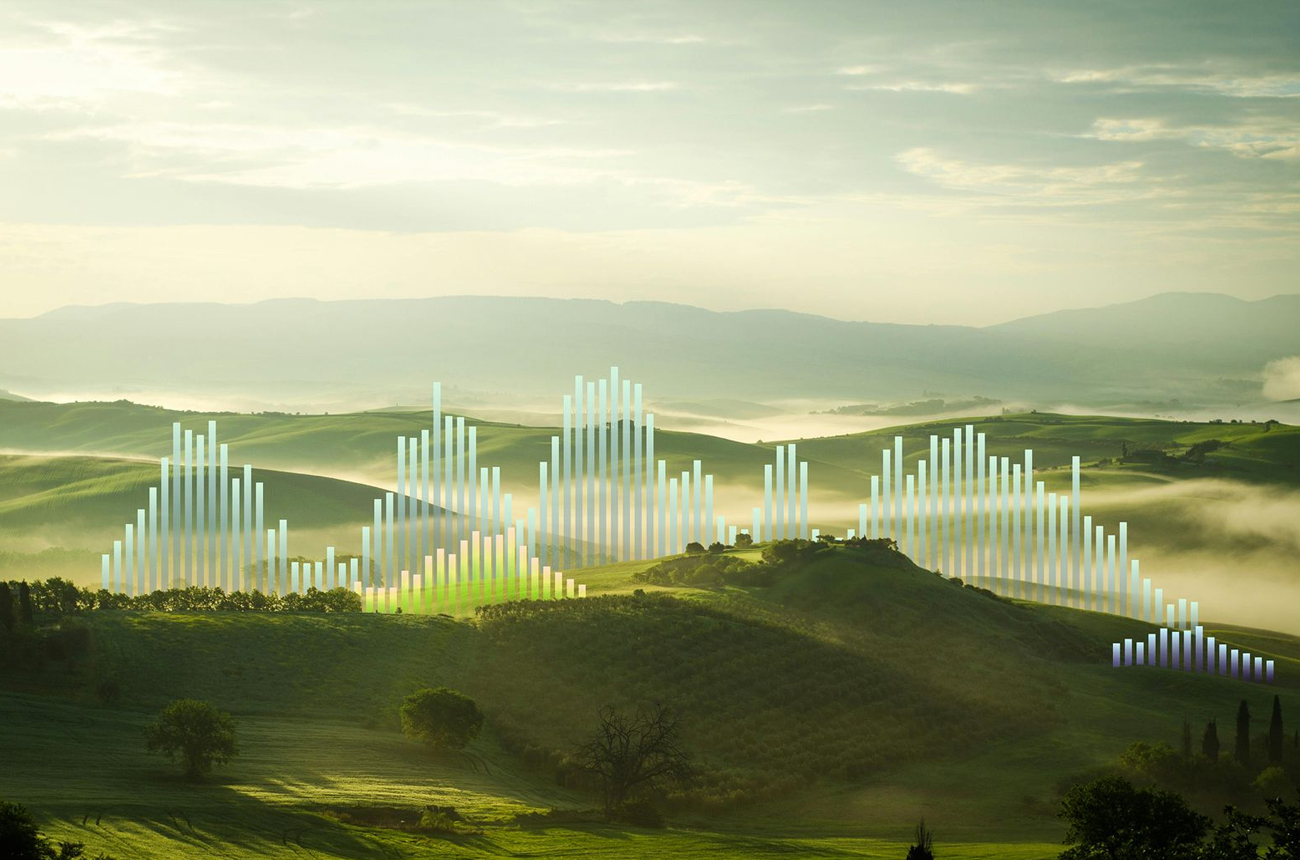
Humans experience a space through each of their five senses. Take, for example, a visit to the beach. If you were to recollect that memory, you would not just think about the visuals but also about the feeling of sand and breeze against your skin, the taste of salt in the air, the smell of tangy humidity, and the sound of waves hitting the shore.
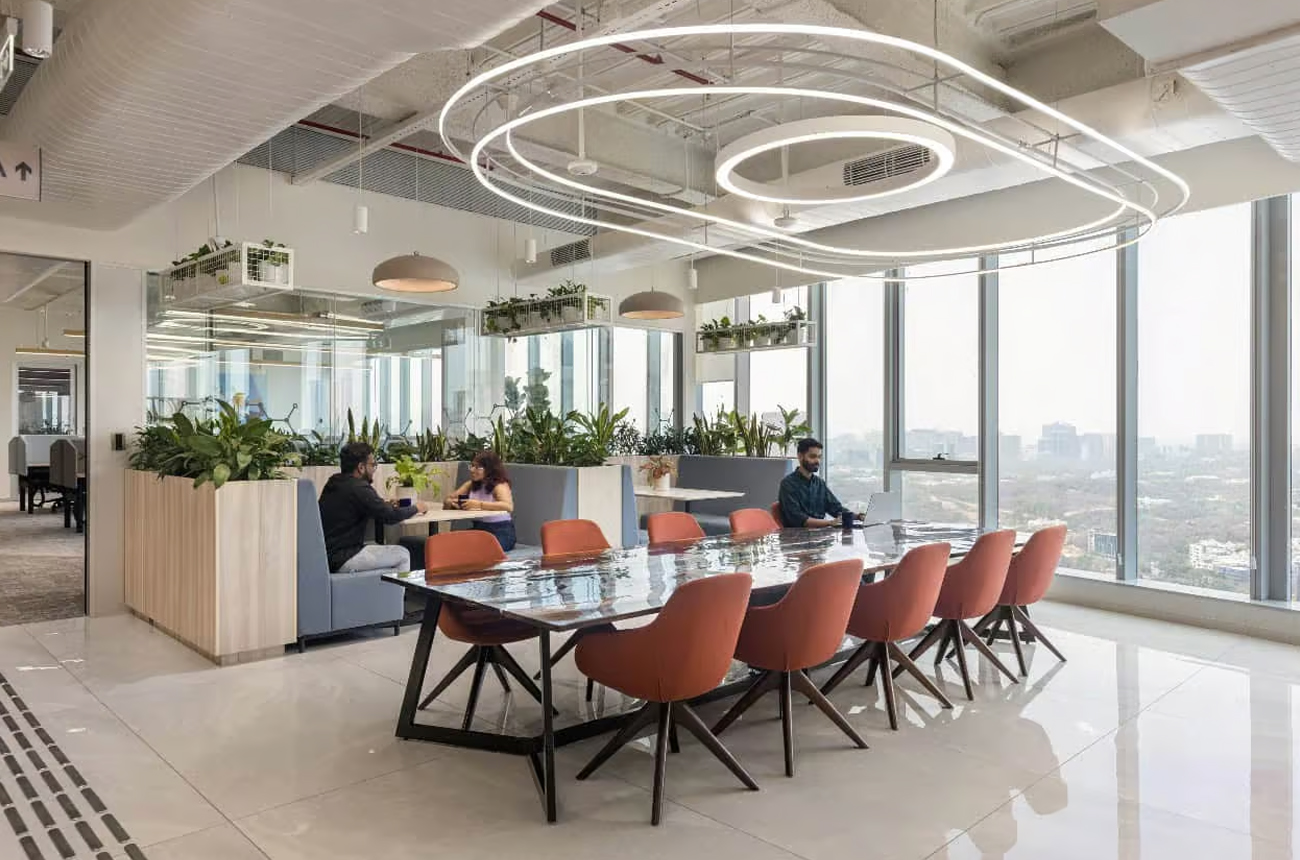
When we think of healthcare design, our minds might immediately focus on efficient layouts, soothing colour schemes or clean lines. But there’s one invisible factor that often gets overlooked in these spaces: sound. Hospitals and healthcare facilities are full of noise. And this noise isn’t inconsequential; it shapes the experience of patients, staff and visitors in profound ways.

There’s something inherently enjoyable about the crashing of waves on a beach, the rhythmic patter of raindrops on leaves, the gurgling of a gentle stream or the rush of a cascading waterfall. The sounds of water are some of the most popular and powerful sounds in the world. But why? And how can we use biophilic design to harness that power to improve people’s health indoors?

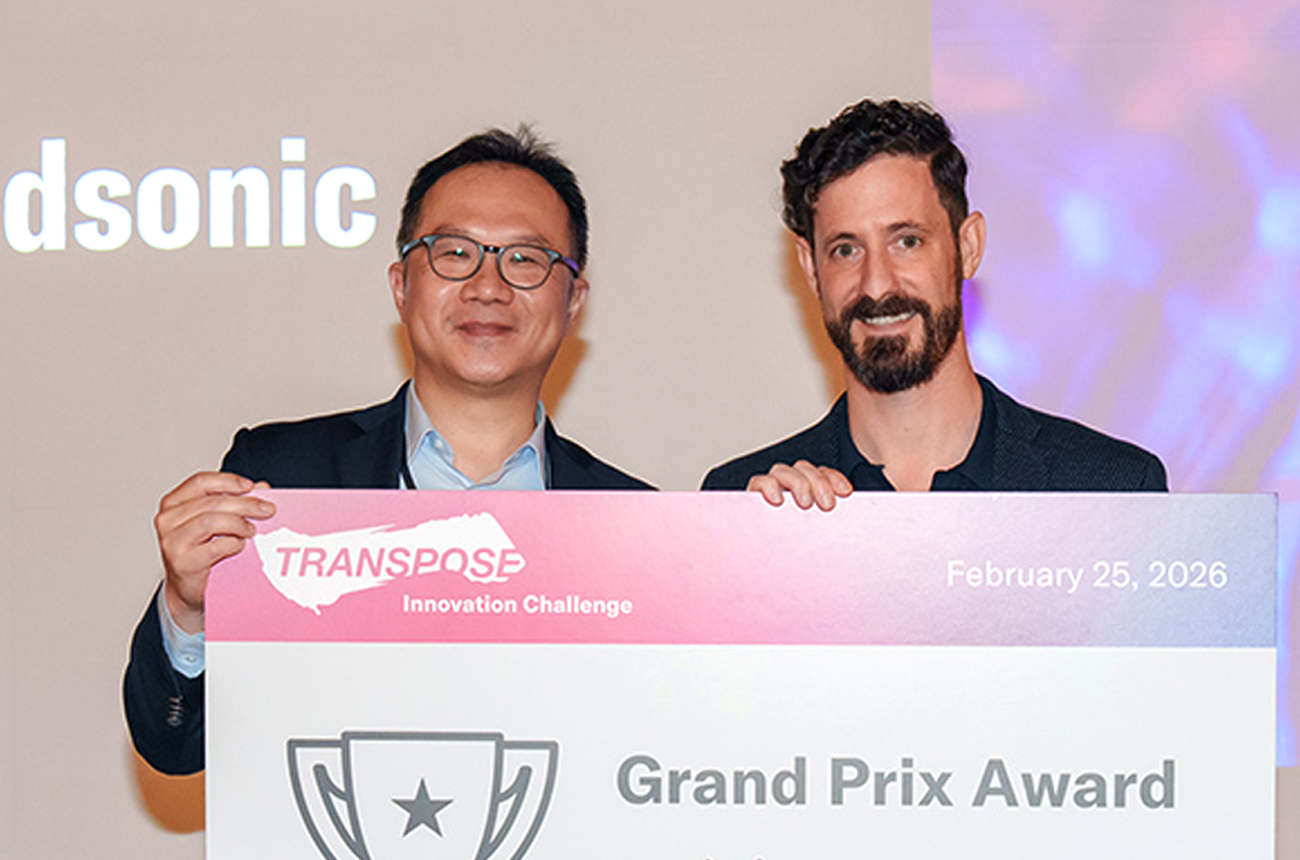
Lighting and acoustics specialists Acoulite have partnered with Moodsonic to bring the scientifically-designed sounds of nature into their Dubai workplace in a new showcase open to industry professionals.

In commercial real estate, creating spaces that foster both performance and well-being is more important than ever. A key factor that's often overlooked in this is the role of sound. Quiet Mark is a global certification program for the built environment sector, committed to improving sonic environments in commercial and residential spaces.

Moodsonic today announced a new collaboration with the MSK Innovation Hub to research nature-based soundscaping for patient recovery in the oncology setting. The goals of the collaboration are to generate new insights into how soundscapes influence the patient experience, develop new practices and technologies, and ultimately improve both patient and hospital staff’s well-being through sound.

They didn’t call it ‘sound masking’ in the Wild West but the constant janky tones of the honky tonk piano most certainly played that role as much as it did a rudimentary form of entertainment.As the Hollywood Western trope goes: when the piano player stops, all eyes turn to the saloon doors. I felt a bit like that standing next to Marcus Rose as he hit the mute button on the Moodsonic control tablet and a room full of Sydney Catholic Schools office staff all paused momentarily, like a split-second mannequin challenge, wondering what had changed.
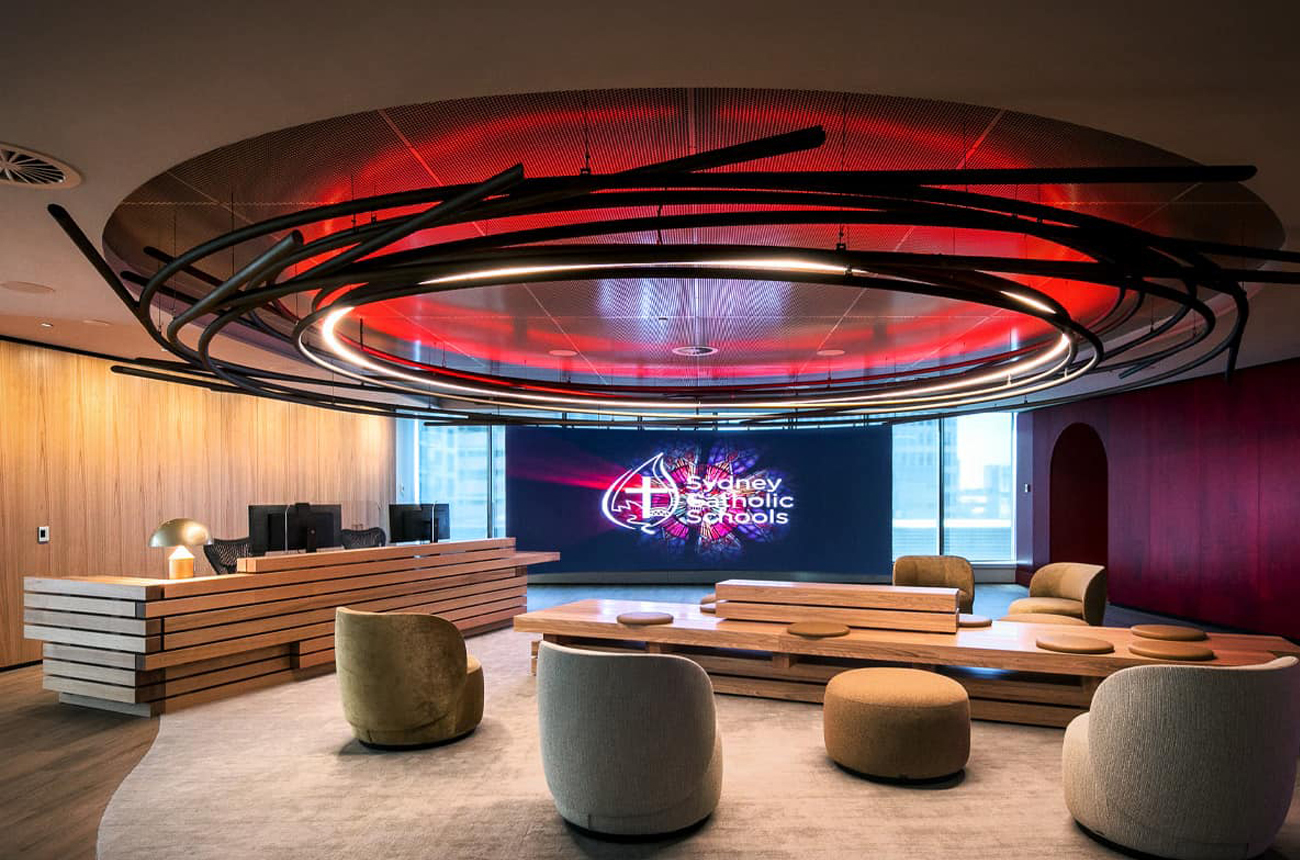
The last few years have been a constant reminder of how quickly things can change. In the world of workplace there’s been recognition of the need for flexibility, like modular furniture systems and movable walls. But there’s a sensory element that’s often missing from the conversation about the future of the workplace.
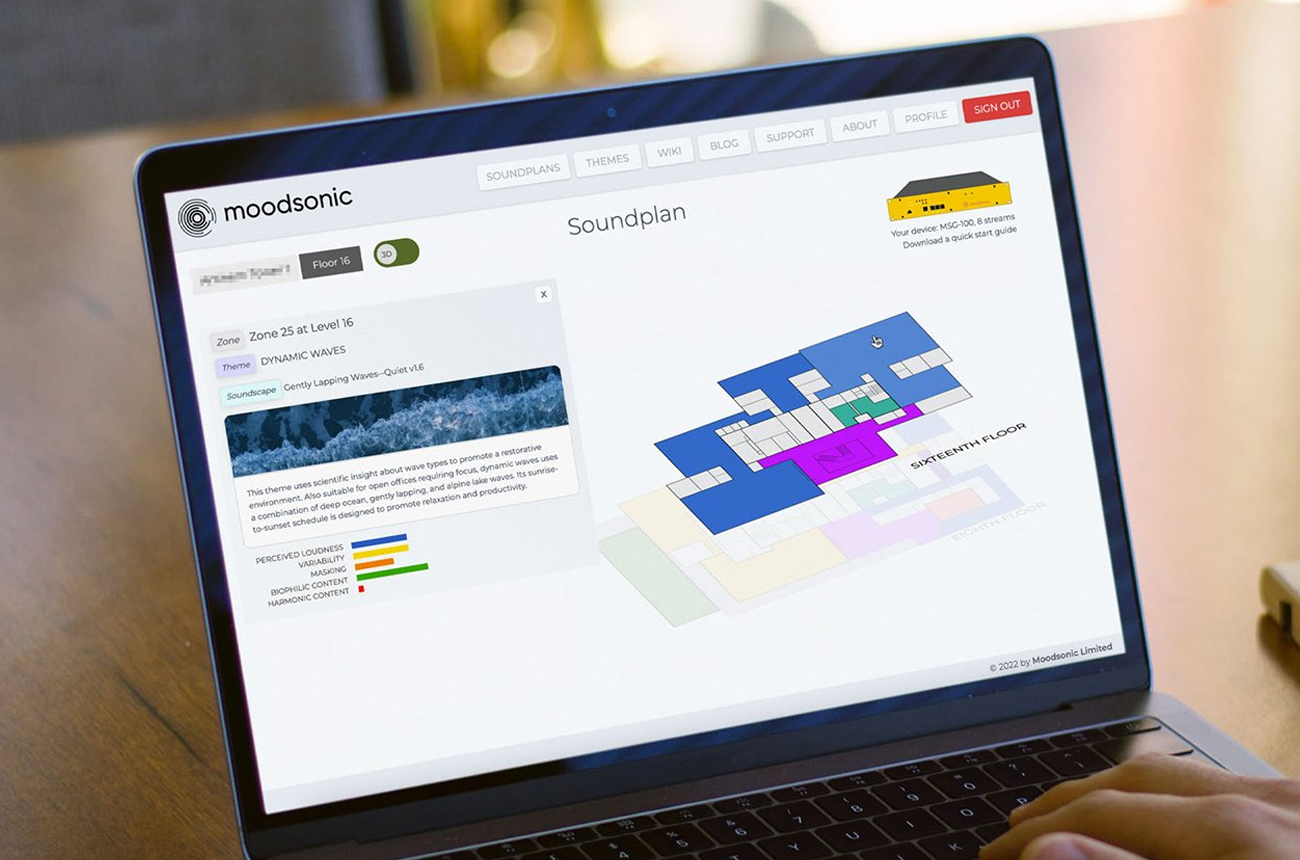
Moodsonic is delighted to have won Work Design Magazine’s Return to office award, which was awarded as part of their Next Environment awards for products that defines the path forward for the future of work.Moodsonic worked with Elevance Health, formerly Anthem, a Fortune 50 healthcare company, to implement a sensory, experiential return to office strategy.